
The Holy See and Vatican City State are related but distinct references. The Governorate describes Vatican City State separately from the Catholic Church’s central government, the Holy See. That distinction helps make sense of a media system whose audience and subjects extend well beyond a small territorial viewing area.
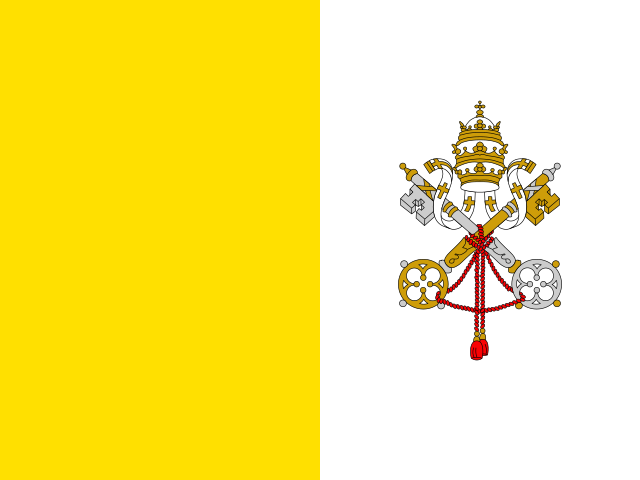
At a glance
| Reference | Detail |
|---|---|
| Institutional distinction | Holy See and Vatican City State are separate scopes |
| News portal | Vatican News |
| Editorial context | Explicit Catholic mission and perspective |
| Live destination | Vatican Media Live |
The institution and the territory are different scopes
The Governorate’s explanation identifies the Holy See through the Pope and the bodies assisting the Church’s central government. Vatican City State provides a distinct territorial and institutional setting. The two names should not be reduced to interchangeable geographic labels.
For a viewer, this explains why a Holy See news service can address local churches and world developments as well as activity within Vatican City. The scope of the institution is different from a list of events occurring inside the territory.
Vatican News identifies its own editorial purpose
Vatican News describes itself as the Holy See’s news portal, working through text, audio, video and images across languages. Its About page explicitly connects that work with the Catholic Church’s mission and a faith-based interpretation of events.
That stated perspective is part of understanding the service. A viewer can follow an account of a papal activity, a local church story or a world-news item while retaining the source and the editorial context in which it is presented.
An event transmission differs from an edited report
The Dicastery for Communication provides a separately named Vatican Media Live destination. A continuing event presentation and a news item about that event answer different viewing needs.
Someone following the event itself may want its progression. Someone catching up afterward may prefer a report that selects and explains the main points. A short report and a longer transmission can concern the same occasion without containing the same material.
| Reference | Useful scope |
|---|---|
| Holy See | The Church’s central institutional government |
| Vatican City State | The distinct state and territorial setting |
| Vatican News | Multilingual news portal with a stated Catholic perspective |
| Vatican Media Live | Separately identified live-event destination |
Select a language version without assuming every track
The portal’s language choices offer different editorial entry points. A language menu for news text should remain distinguishable from the spoken language of an event or an individual video. Use the actual item’s presentation when seeking a particular version.
Country and language reference
| Reference | Detail |
|---|---|
| Directory name | Holy See |
| ISO code | VA |
| Region | Europe |
| Capital reference | Vatican City |
| Language context (CLDR snapshot) | Italian, Latin |
A dated clock example
A program time needs a date and a named time zone. The example below converts the same fixed UTC instant into the zones recorded for this directory entry; it is an illustration rather than a live clock.
| IANA time zone | Local date and time | UTC offset |
|---|---|---|
| Europe/Vatican | 2026-11-04 21:00:00+01:00 | +0100 |
Useful answers
Are the Holy See and Vatican City State the same geographic label?
No. The Governorate distinguishes the Holy See’s institutional role from Vatican City State. That difference is relevant to the wider scope of its media services.
Is a Vatican News report equivalent to the full event transmission?
No. An edited report selects and explains material. A separately identified event presentation follows a different format and can have a different scope.