
Fiji's broadcasting collections bring local productions, acquired television and several radio language contexts together. FBC describes television as one part of its work, alongside six radio stations grouped in iTaukei, Hindustani and English.
Those language groupings identify radio services, rather than a promise that every television program offers three audio versions. The station, medium and production title help distinguish the material a household wants to follow.
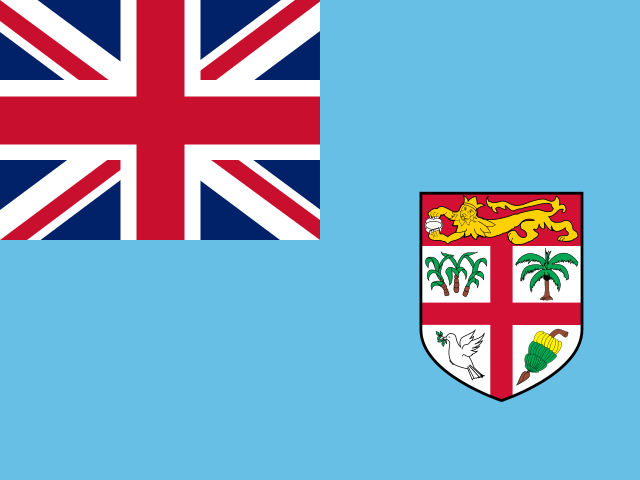
At a glance
| Reference | Detail |
|---|---|
| Radio languages | Separate iTaukei, Hindustani and English station pairs |
| Public service radio | Radio Fiji One and Radio Fiji Two |
| Television mix | Local programs and acquired material appear in a dated FBC TV lineup |
FBC's radio pairs serve different language audiences
The broadcaster identifies Radio Fiji One and Bula FM with iTaukei, Radio Fiji Two and Mirchi FM with Hindustani, and Gold FM and 2Day FM with English. It also distinguishes the public-service roles of Radio Fiji One and Radio Fiji Two from its commercial radio operations.
A parliamentary FBC submission separately explains those public-service radio purposes in relation to national development and cultural and religious diversity. The institutional distinction should stay attached to the named stations; it does not turn every service in the group into an identical program collection.
Television combines local and acquired productions
FBC's television introduction describes local documentaries and social programs alongside its commercial offering. Walesi's November 2, 2026 guide gives a concrete example of that broader mixture: FBC News, Your Voice, children's material such as Just Kids, acquired fiction and separately labelled ABC Australia programming.
These associations distinguish the source of a production from the channel carrying it. An acquired drama retains its own production identity, while a local news edition or discussion reflects a different editorial setting within the same lineup.
A program listing supplies a closer reference
The dated Walesi guide separates FBC News from Rashtriye Samachaar and other named productions. Those names provide useful starting points without assuming the spoken language of an item solely from the channel's country label.
The guide also includes repeated and age-labelled material. A repeat listing does not announce a newly produced episode, and an age label concerns that production rather than the whole channel. The published day is an example of program organization, not a permanent future timetable.
For viewers researching Fiji, the useful distinction is consequently between a local television production, acquired entertainment and a particular radio language service. That preserves the country's different cultural and audience contexts while avoiding an undifferentiated list of FBC names.
Country and language reference
| Reference | Detail |
|---|---|
| Directory name | Fiji |
| ISO code | FJ |
| Region | Oceania |
| Capital reference | Suva |
| Language context (CLDR snapshot) | English, Hindi, Fiji Hindi, Fijian |
A dated clock example
A program time needs a date and a named time zone. The example below converts the same fixed UTC instant into the zones recorded for this directory entry; it is an illustration rather than a live clock.
| IANA time zone | Local date and time | UTC offset |
|---|---|---|
| Pacific/Fiji | 2026-11-05 08:00:00+12:00 | +1200 |
Useful answers
Do FBC’s three radio language groupings establish every TV program’s audio options?
No. The language pairings describe named radio stations. Individual television productions need their own language information.
Are Radio Fiji One and Bula FM identical because both have an iTaukei context?
FBC names them separately and distinguishes public-service and commercial radio operations. A shared language context does not make them one station.