
Djibouti's national broadcaster, RTD, produces both radio and television. Its current television-news archive presents several separately labelled editions rather than one undifferentiated daily video.
Language is a useful part of that structure. The collection explicitly identifies French, Arabic and English news entries, alongside Warka and Xaagu program labels. Keeping those names with their editions is more accurate than assuming the language of every item from the broadcaster's French institutional name.
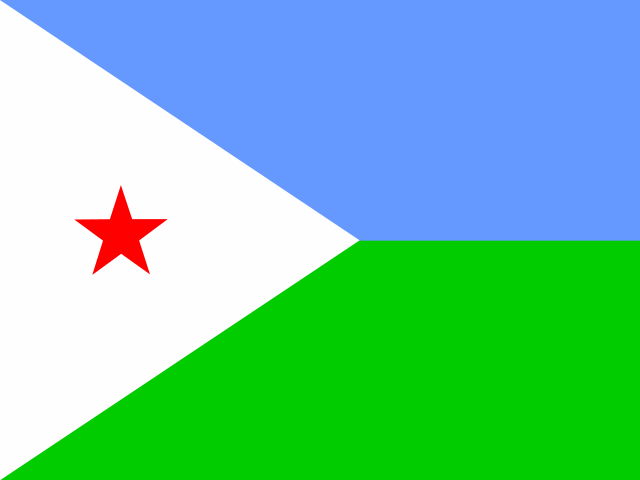
At a glance
| Reference | Detail |
|---|---|
| National broadcaster | RTD produces radio and television programs |
| Current language labels | French, Arabic and English news editions |
| Historical languages | Somali, Afar, Arabic and French in the 1999 remit |
The archive separates news editions
RTD's November 3, 2026 collection includes Journal en Français, Journal en Arabe and English News. Warka and Xaagu also appear as separately named editions on the same archive page.
These labels help someone seeking a particular presentation of the day's reporting. They identify individual news productions, rather than proving that one video has multiple selectable soundtracks. The stated edition also differs from a continuous television channel identity.
A written story on RTD's homepage is another form again. It can concern the same development without being the complete television bulletin in which a related report may appear.
National languages have a documented institutional history
Djibouti's official 1999 RTD decree discusses Somali, Afar, Arabic and French within its broadcasting remit. It also describes responsibilities for children's and youth programs, theatre, music, sport and weather.
That historical document explains the broader language and program context behind the institution. It should not be used as a current quota for how many bulletins are produced today or as a guarantee of the precise lineup on a particular date.
RTD's subjects extend beyond one kind of news
The broadcaster's current site organizes social and cultural material separately from sports and other reporting. Its published subjects include local institutions, community activity and research or cooperation involving the Horn of Africa.
That range gives viewers different reasons to follow RTD: a language-labelled bulletin, a cultural subject, a sports report or a regional-interest story. The radio-and-television institution connects these activities, while the individual production and medium preserve their differences.
For a household following Djibouti from abroad, start with the named news edition or subject collection. Retaining the language label and program title helps distinguish the material within RTD's wider national output without turning every item into the same broadcast.
Country and language reference
| Reference | Detail |
|---|---|
| Directory name | Djibouti |
| ISO code | DJ |
| Region | Africa |
| Capital reference | Djibouti |
| Language context (CLDR snapshot) | French, Afar, Somali, Arabic |
A dated clock example
A program time needs a date and a named time zone. The example below converts the same fixed UTC instant into the zones recorded for this directory entry; it is an illustration rather than a live clock.
| IANA time zone | Local date and time | UTC offset |
|---|---|---|
| Africa/Djibouti | 2026-11-04 23:00:00+03:00 | +0300 |
Useful answers
Does RTD’s French institutional name mean all its news is in French?
No. Its current archive explicitly lists French, Arabic and English editions, alongside other named news productions.
Can the 1999 RTD decree establish today’s exact bulletin count?
No. It provides historical institutional and language context. Current program entries are needed for a particular day’s output.