
American Samoa’s KVZK has a local public-information and educational history that is more specific than a list of imported network names. Government records document community conversation and farming productions, while the National Park Service explains how television once formed a central part of classroom teaching in the territory.
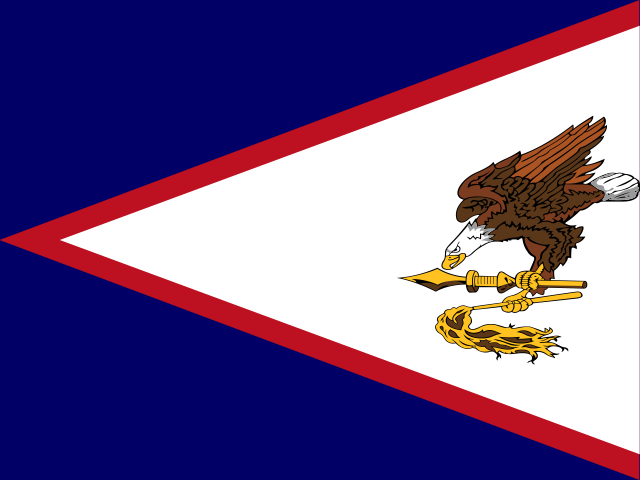
At a glance
| Reference | Detail |
|---|---|
| Territorial scope | American Samoa is a U.S. territory. |
| Public information | Government directory identifies Public Information-KVZK in Utulei. |
| Local productions | March 2023 government newsletter describes Manuo and Atina’e community/farming roles. |
| Education history | NPS documents classroom television and the role of Samoan teachers in 1960s–1970s. |
The scope is American Samoa and its local institutions
The U.S. Department of the Interior identifies American Samoa as a U.S. territory. Its own government directory identifies Public Information-KVZK in Utulei. Those sources establish the territorial and institutional context of this guide, rather than treating a broad Samoan-language label as a complete service identity.
A local public-information production can concern territorial government, community activity or everyday affairs. That purpose differs from the editorial role of a mainland network program carried in the same wider television environment. The institution and the individual production should remain separately identified.
Manuo and Atina’e document different community conversations
The American Samoa Government’s March 2023 Tapuitea newsletter describes Manuo as a talk format for local announcements and conversation involving government and private organizations. It describes Atina’e as a program where local farmers share experience with growing and promoting produce and food security.
These are concrete examples of locally relevant subjects beyond a conventional news bulletin. They are documented 2023 production descriptions, however, not a verified 2026 running order. The same newsletter’s proposed network arrangements should not be read as proof that every planned affiliation or channel assignment is current.
Educational television has a specific history in Utulei
The National Park Service describes the Michael J. Kirwan Educational Television Center as part of American Samoa’s1960s and 1970s educational television experiment. Teachers delivered lessons on camera, while Samoan teachers remained in classrooms to provide context, bilingual teaching and feedback.
The account also explains that the classroom television model later declined and the building continued as KVZK’s home. This history helps explain the broadcaster’s educational roots without suggesting that today’s schools still use the same system. It is a historical interpretation of a communications site, not a current curriculum, a building-visit invitation or a tested live television service.
Country and language reference
| Reference | Detail |
|---|---|
| Directory name | American Samoa |
| ISO code | AS |
| Region | Oceania |
| Capital reference | Pago Pago |
| Language context (CLDR snapshot) | Samoan, English |
A dated clock example
A program time needs a date and a named time zone. The example below converts the same fixed UTC instant into the zones recorded for this directory entry; it is an illustration rather than a live clock.
| IANA time zone | Local date and time | UTC offset |
|---|---|---|
| Pacific/Pago_Pago | 2026-11-04 09:00:00-11:00 | -1100 |
Useful answers
What distinguishes Atina’e from a general announcements program?
The 2023 government newsletter describes Atina’e as local farmers sharing experience with produce and food security. Manuo is described more broadly as community conversation and announcements; neither old description establishes today’s airtime.
Does KVZK’s educational history describe the current school system?
No. The National Park Service describes a 1960s–1970s teaching experiment and its later decline. That history explains the Utulei site and broadcaster’s roots, not present classroom practice.