
The query portion of a URL can carry resource choices and private account information. It is not disposable text appended for appearance. Removing it to make a playlist address shorter can change the request or prevent the intended account resource from being retrieved.
A question mark commonly separates the query from the preceding path. The meaning of the values is defined by the receiving service, not by their English-looking names alone. Keep the authorized original intact while investigating a configuration problem.
Distinguish structure from meaning
A query can contain several name-value pairs separated according to the relevant encoding convention. Some values may select output or catalogue options; others may authenticate access. Do not assume a parameter is harmless because it is near a public channel name or uses a familiar label.
The generic URL structure does not prove that a particular parameter can be reordered, deleted or decoded without changing behaviour. Applications can interpret their inputs in specific ways. A viewer should not normalize a private account address by trial and error.
Inspect without exposing
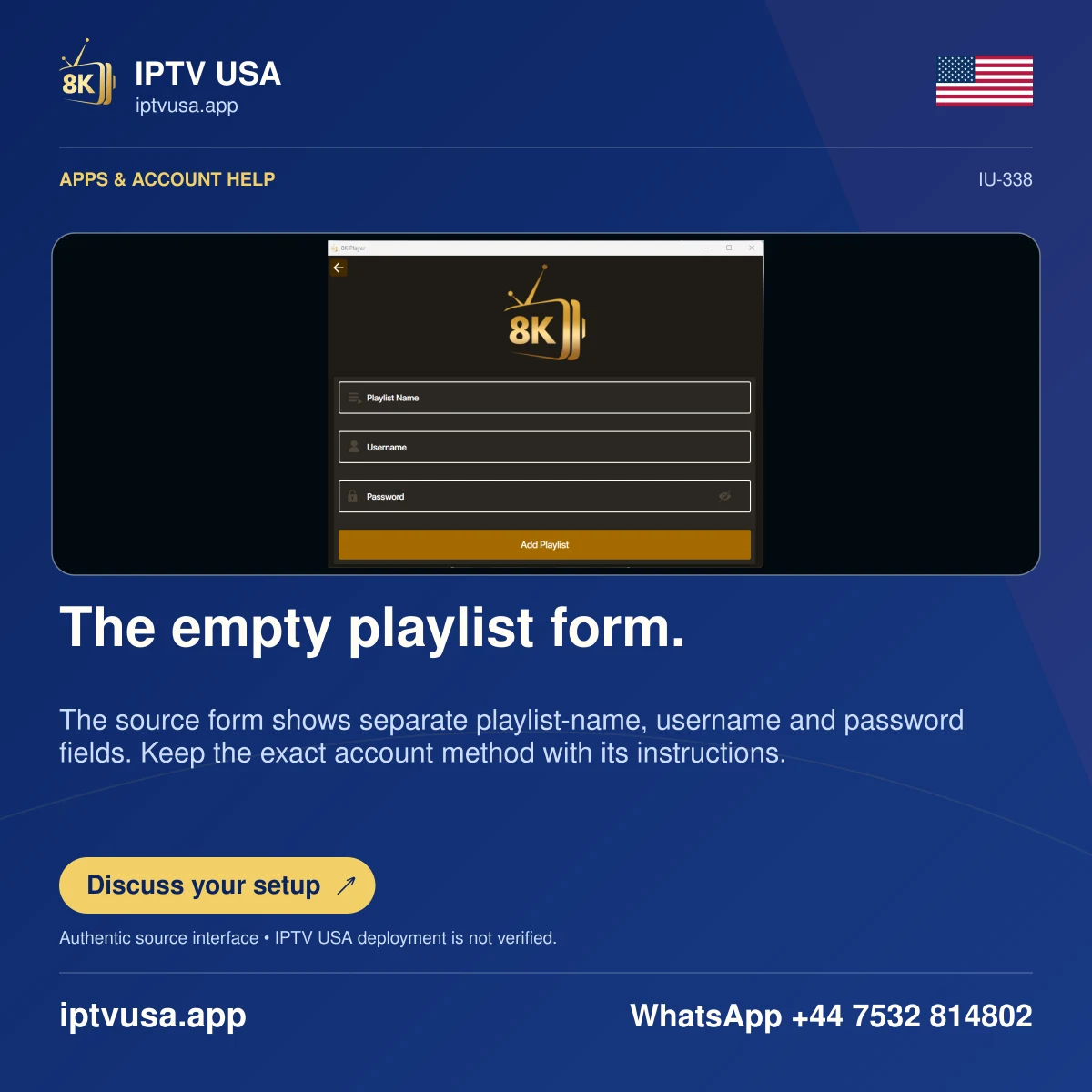
A player expecting separate account fields may not want the full query URL in its base-server box. That is an input-method issue. Follow the documented layout for the actual app instead of treating every address-shaped value as interchangeable.
- Identify the query boundary in a private copy of the authorized address.
- Preserve the full original instead of trimming unrecognized components.
- Check the player’s required input form and the provider’s actual instructions.
- Redact access-bearing values in any support example.
- Ask about a specific suspected mismatch rather than rewriting the entire query.
Avoid accidental redistribution
Queries can appear in browser history, screenshots and logs. A cropped image that hides a password field can still expose the full private URL elsewhere. Review all visible addresses before sharing a support packet.
Do not put an account-bearing URL through a public link shortener or online editor merely to simplify it. That gives another system the complete value. A neutral local source label can make the player easier to navigate without changing or redistributing the private address.
For support, describe the field and error with a harmless fictional query that preserves the relevant structure. If actual private values are required, use the established appropriate route. The useful outcome is the correct authorized address in the correct input method, with significant components preserved and disclosure understood.
Useful answers
Can query parameters contain credentials?
Yes. Treat actual values as potentially access-bearing.
Is removing the query a safe way to shorten the URL?
No. It can change or invalidate the request.
Does every player expect a full playlist URL in its server field?
No. Check the application’s supported account input method.